
-
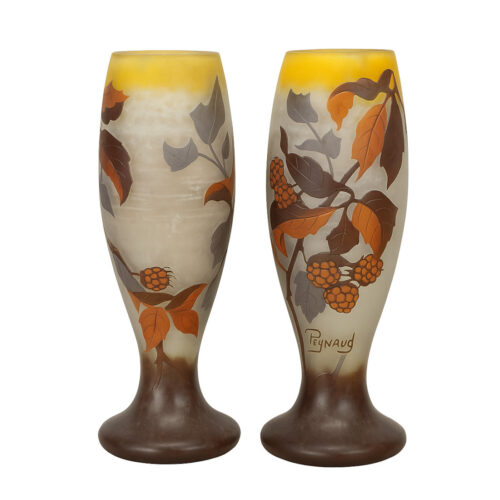 1 × 209,00 €Quantity:
 -
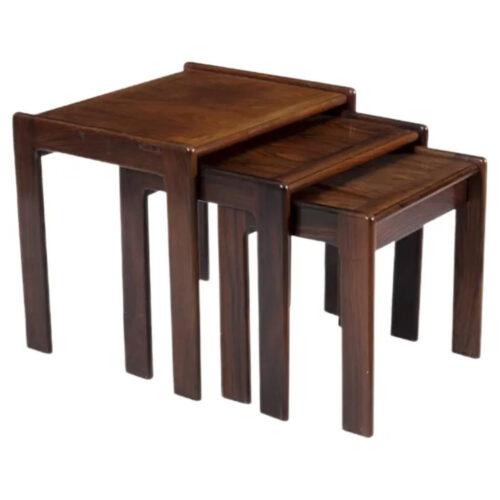 1 × 650,00 €Quantity:
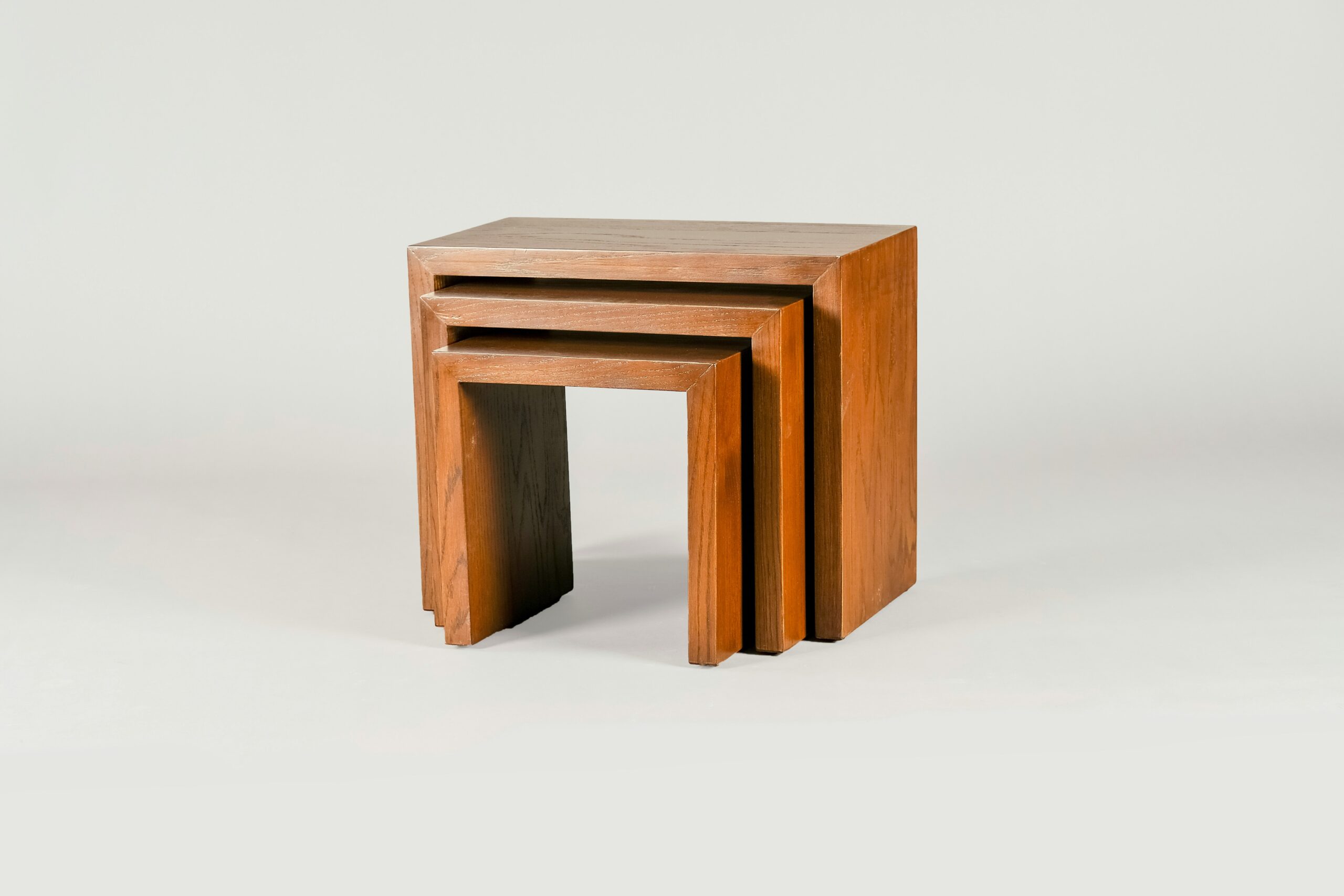
“Nesting Tables by Svend Åge Madsen for Karl Lindegaard, 1970s, Set of 3” has been added to your cart. View cart
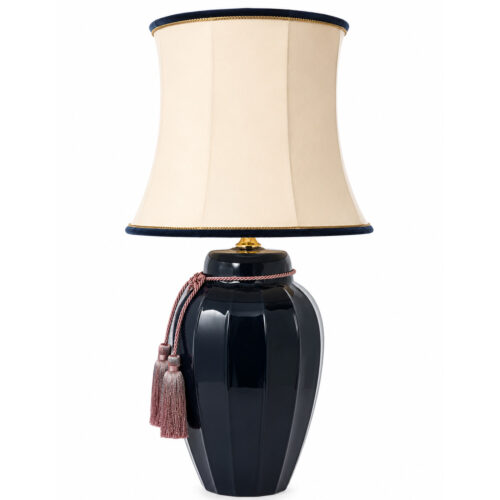
Midnight Blue Porcelain Table Lamp Contemporary Classic
180,00 €
Midnight Blue Porcelain Table Lamp
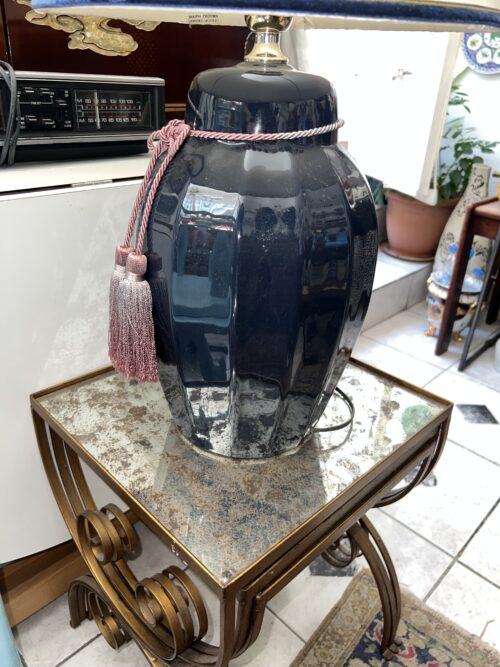
A sophisticated Midnight Blue porcelain table lamp featuring a beautifully faceted baluster-shaped body with a high-gloss glazed finish. The rich midnight blue colour is complemented by polished brass fittings and an elegant ivory fabric shade with matching midnight blue trim. Decorative silk tassels add a timeless finishing touch, creating a refined statement piece for both classic and contemporary interiors.
Beautifully proportioned, this impressive lamp offers a warm ambient light while serving as a striking decorative object.
Dimensions
- Overall Height (including shade): 72 cm (28.3 in)
- Height to Top of Lamp Base (excluding shade): 42 cm (16.5 in)
- Base Diameter: 22 cm (8.7 in)
Material
- Glazed porcelain
- Brass fittings
- Fabric shade
Colour
Midnight Blue
Style
Contemporary Classic • Hollywood Regency • Modern Luxury
Condition
Excellent vintage condition with only minor signs of age and use. Fully functional and ready for installation.
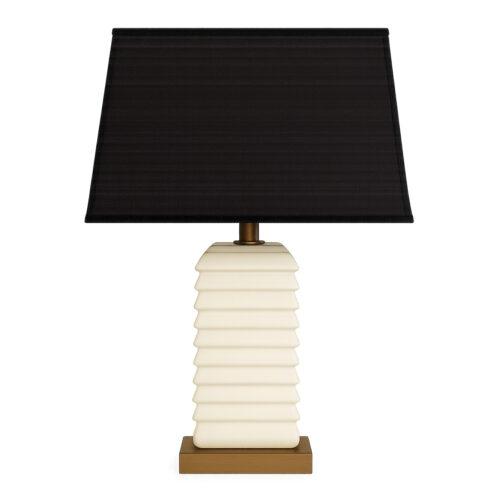
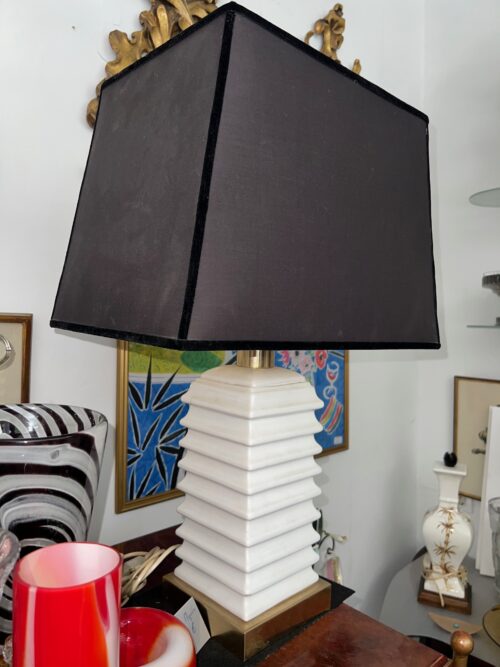
Modern Fluted and Solid Brass Table Lamp, Late 20th Century.
850,00 €
Late 20th century modern table lamp, with a fluted ceramic column and rectangular black lampshade. The base features a tiered, stepped design reminiscent of architectural forms, and it is mounted on a brass-finished plinth. The lampshade has a clean, minimalist shape with black fabric and velvet-trimmed edges, adding a touch of sophistication. Perfect as a statement piece for a vintage or contemporary interior
Features:
-
Base Material: Ceramic with metal detailing
-
Base Color: White with brass-tone accents
-
Shade: Black fabric, trapezoidal shape
-
Style: Mid-Century Modern / Vintage-inspired
-
Socket Type: E27
-
Bulb Compatibility: LED, CFL, or standard incandescent bulbs
- 75cm x 21cm
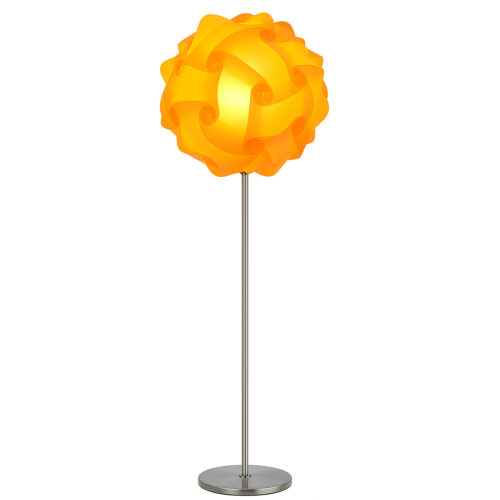
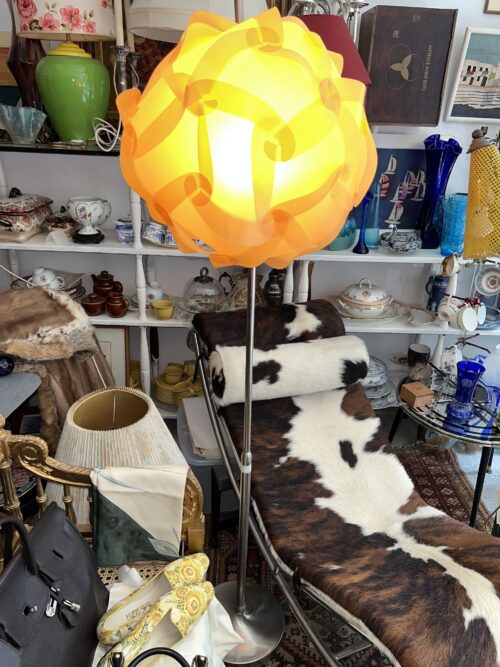
Modular Jigsaw Puzzle Lamp – Modern IQ Floor Lamp
120,00 €
Modular Jigsaw Puzzle Lamp – Modern IQ Floor Lamp
Brighten your space with this unique and eye-catching jigsaw puzzle lamp, also known as an IQ lamp was designed by Holger Strøm, a Danish designer, in 1973or origami puzzle light. Designed from interlocking plastic pieces, this modular lighting fixture forms a mesmerizing geometric sphere that casts a warm, ambient glow—perfect for modern, eclectic, or Scandinavian-inspired interiors.
The shade is crafted from durable, lightweight plastic panels that slot together like a puzzle, creating a bold sculptural form. Mounted on a sleek, minimalist metal floor stand, the lamp becomes a striking centerpiece in any room—living room, studio, bedroom, or creative workspace.
Product Features:
-
Type: Floor lamp with modular jigsaw puzzle shade (IQ lamp)
-
Material: Durable interlocking plastic pieces, metal base and stand
-
Color: Bright orange/yellow glow
-
Style: Modern, contemporary, retro, sculptural
-
Lighting: Emits soft ambient light, ideal for mood or accent lighting
-
Dimensions: 40cm Χ 160cm
Perfect For:
-
Modern home decor
-
Creative office spaces
-
Unique gift ideas
-
Mid-century or retro-inspired interiors
Add an artistic touch to your lighting with this bold and functional modular IQ puzzle lamp.
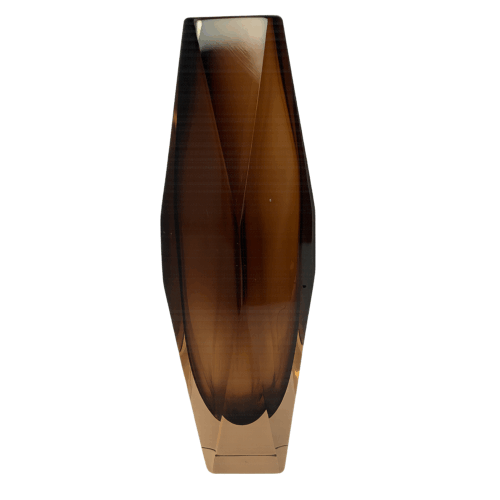
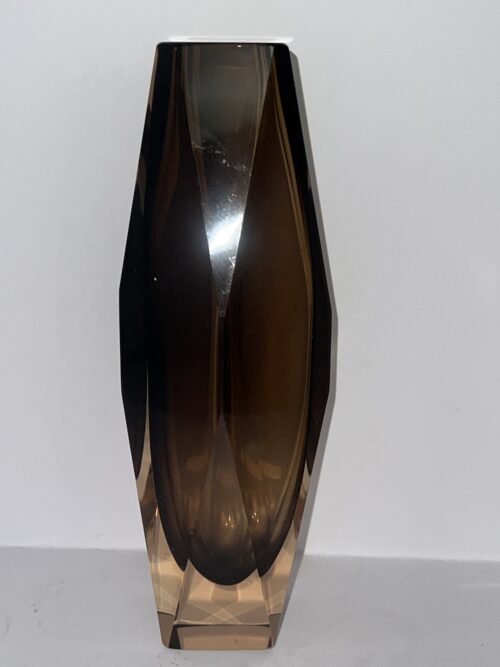
Murano Faceted Brown Glass Vase (22cm x 9cm), 1960’s
700,00 €
An exceptional example of Murano artistry, this vase is handcrafted from fine brown glass using traditional Venetian techniques. The faceted, geometric form enhances the natural depth and luminosity of the glass, creating a dynamic play of light across its surface. With dimensions of 22cm in height and 9cm in width, it is ideally sized for display as a decorative centerpiece or as a vessel for floral arrangements. A distinctive piece that reflects the elegance and heritage of Murano craftsmanship.
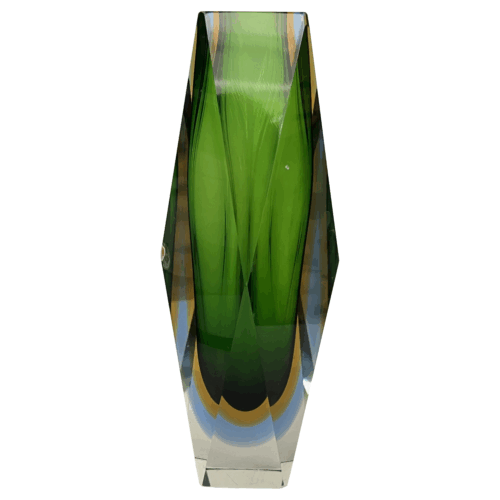
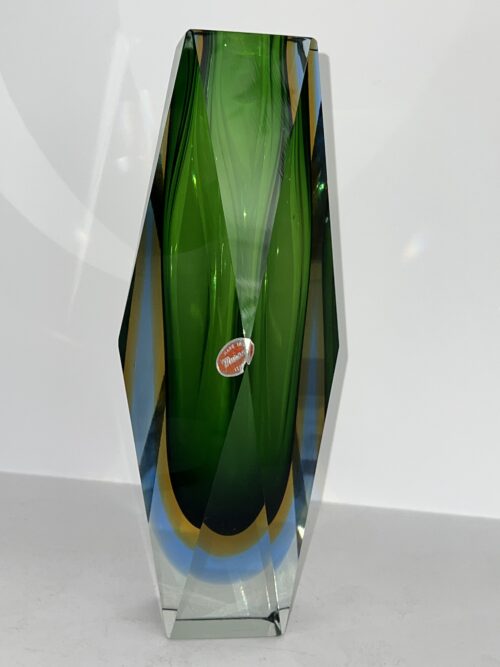
Murano Faceted Four-Layer Sommerso Glass Vase – Mid-Century Modern
600,00 €
A stunning vintage Murano glass vase crafted using the iconic Sommerso (submersion) technique, likely from the 1960s–1970s. This tall faceted block design features four distinct layers of color: a rich green core, surrounded by amber, then blue, and finally encased in thick clear crystal. The sharply cut, geometric facets create a striking prismatic effect, allowing light to refract through each color layer with jewel-like brilliance.
The elongated, angular block form exemplifies the sculptural modernist style for which Murano glassmakers such as Mandruzzato and others became renowned. Retains its original Made in Murano Italy label.
-
Origin: Murano, Italy
-
Technique: Sommerso (four-layer submersion glass)
-
Design: Faceted block vase with layered green, amber, blue/teal, and clear crystal
-
Period: Mid-20th century (c. 1960s–1970s)
-
Condition: Excellent vintage condition, light wear consistent with age
-
Dimensions: 30cm x 9cm
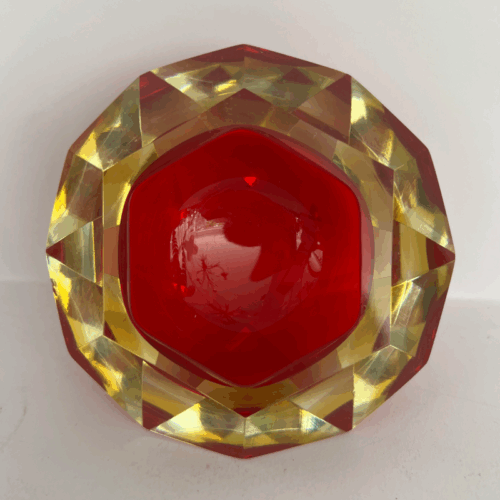
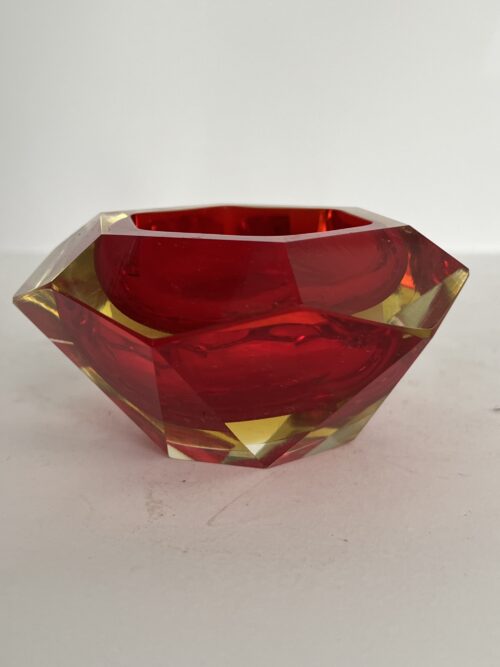
Murano Faceted Sommerso Glass Bowl – Red, Amber, and Clear Mid-Century Modern
300,00 €
A striking Murano glass bowl crafted in the renowned Sommerso (submersion) technique, dating from the 1960s–1970s. The piece features a rich ruby red core encased in a layer of golden amber, all surrounded by thick clear crystal. The sharply cut multi-faceted block form creates brilliant light refractions, giving the bowl a jewel-like appearance.
-
Origin: Murano, Italy
-
Technique: Sommerso (layered/submersion glass)
-
Design: Faceted geometric bowl with red, amber, and clear crystal layers
-
Period: Mid-20th century (c. 1960s–1970s)
-
Condition: Excellent vintage condition with light wear consistent with age
-
Dimensions: 12cm x 12cm x 6.5cm
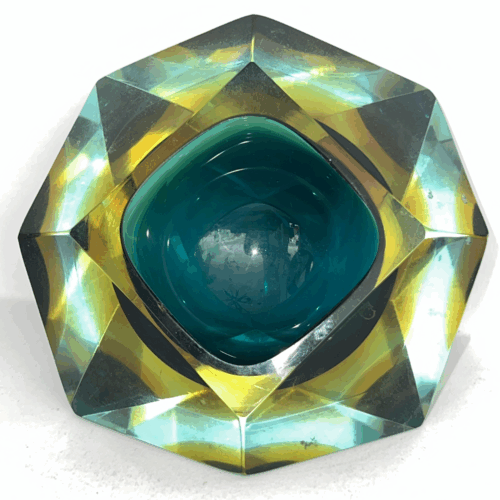
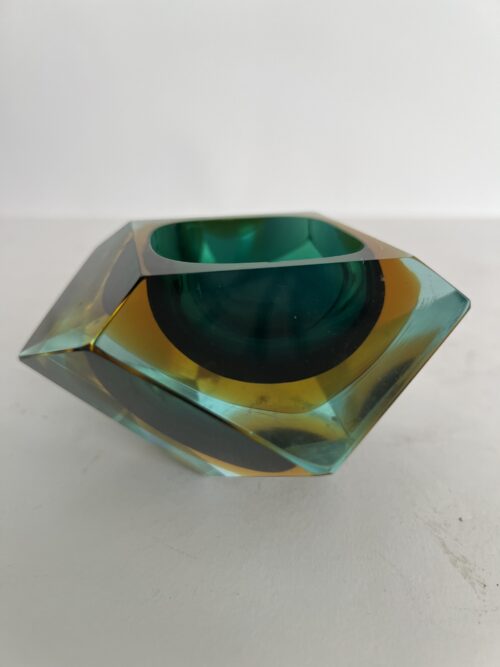
Murano Faceted Sommerso Glass Vintage Bowl
190,00 €
A striking Murano glass bowl crafted in the renowned Sommerso (submersion) technique, likely dating from the mid-20th century. This geometric, faceted block design features rich teal glass layered within a golden amber band, all encased in aquamarine crystal. The interplay of color and transparency creates a stunning optical effect, shifting beautifully under light.
Expertly cut facets highlight the sculptural form and give the piece a jewel-like brilliance. With its substantial weight and striking presence, this bowl functions as both a decorative object and a functional vessel.
-
Origin: Murano, Italy
-
Technique: Sommerso (submersion glass)
-
Design: Faceted block bowl with teal and amber encased in aquamarine crystal
-
Period: Mid-20th century (c. 1960s–1970s)
-
Condition: Very good vintage condition with light wear consistent with age
-
Dimensions: 12cm x 12cm x 7cm h
A fine example of Venetian glass artistry — an eye-catching statement piece for collectors of Murano glass or enthusiasts of bold mid-century design.
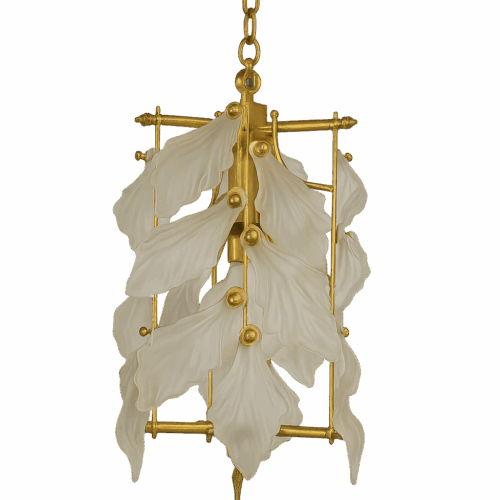
Murano Glass Leaf Chandelier – Attributed to AV Mazzega, Italy, 1970s
1.500,00 €
Bring graceful vintage charm to your space with this exquisite Murano glass chandelier, attributed to the iconic Italian maker AV Mazzega, circa 1970s. Suspended from a decorative brass frame, this sculptural pendant features a cascade of hand-blown frosted glass leaves, each uniquely shaped and softly diffusing light.
The delicate organic form of the glass contrasts beautifully with the warm brass structure, resulting in a design that is both ethereal and architectural. Ideal for entryways, stairwells, or intimate dining settings, this rare piece makes a statement without overpowering the space.
Origin: Italy, 1970s
Maker: Attributed to AV Mazzega
Style: Mid-Century Modern / Hollywood Regency / Murano
Materials: Hand-blown Murano glass, brass
Condition: Excellent vintage condition; minor signs of age on brass consistent with time
Dimensions: Approx. []
Elevate your interior with a touch of vintage Italian elegance and the unmistakable artistry of Murano glass.
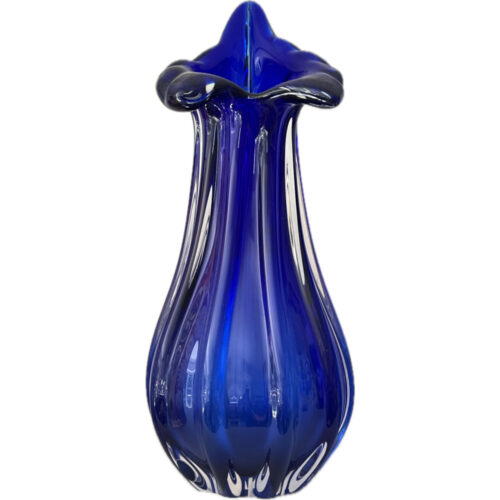
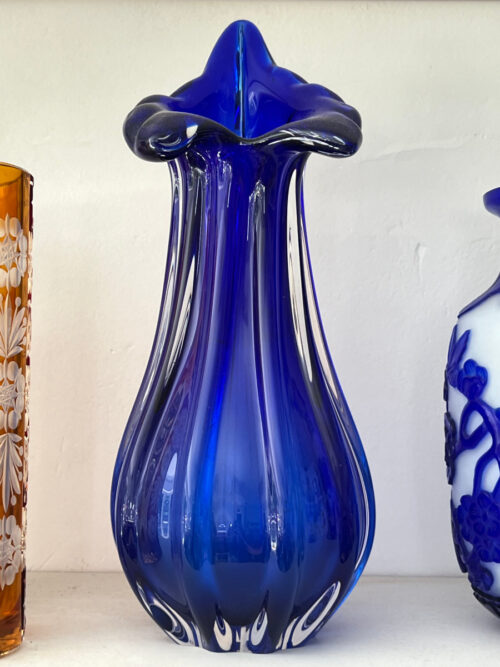
Murano Glass Vase Attributed to Flavio Poli, 1960s
350,00 €
Vintage Design
Attributed to Flavio Poli. Very impressive vase.
1960-1969
Condition: Very Good — This vintage/antique item has no defects, but it may show slight traces of use.
33cm x 15cm
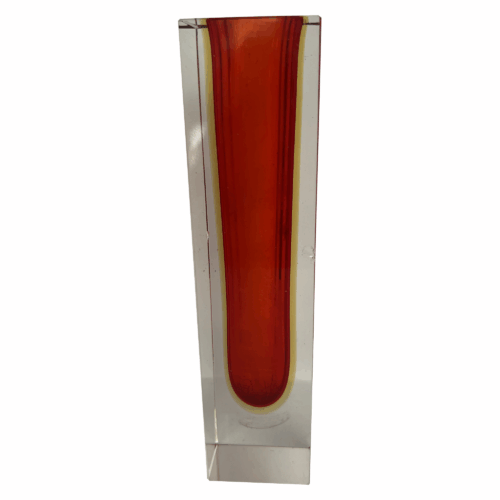
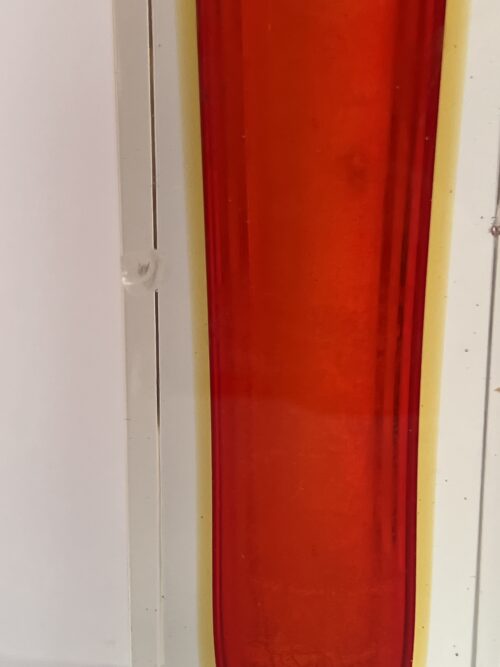
Murano Sommerso Red, Amber and Clear Faceted Glass Block Vase
200,00 €
A striking Murano glass sculpture of tall, rectangular form. The clear glass body encases an elongated internal design in vivid crimson, bordered by a delicate band of amber-yellow. The inner form descends in a graceful teardrop curve, creating a dynamic interplay of color and transparency. This work exemplifies the sommerso technique perfected in Murano during the mid-20th century, balancing bold coloration with minimalist geometric form. Comparable in style to works by Flavio Poli for Seguso Vetri d’Arte.
Condition: Overall very good with light surface wear; 2 small nicks present to two edges.
25cm x 7cm
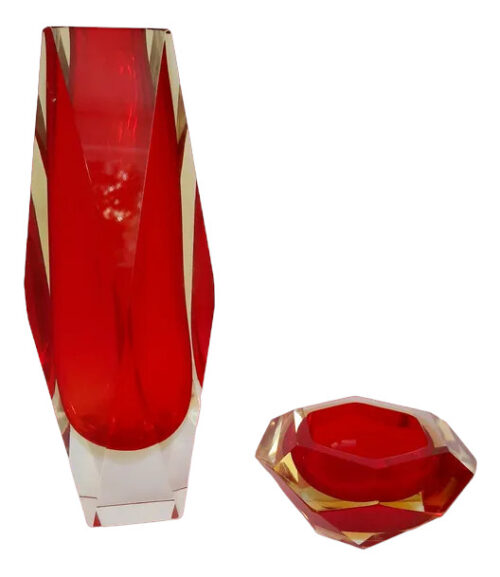
Murano Sommerso Vase and Ashtray, 1970s, Set of 2
480,00 €
Rare Murano faceted vase and ashtray in red, yellow and white.
1970-1979, Italy.
Vase 25cm
Ashtray 11.5cm