
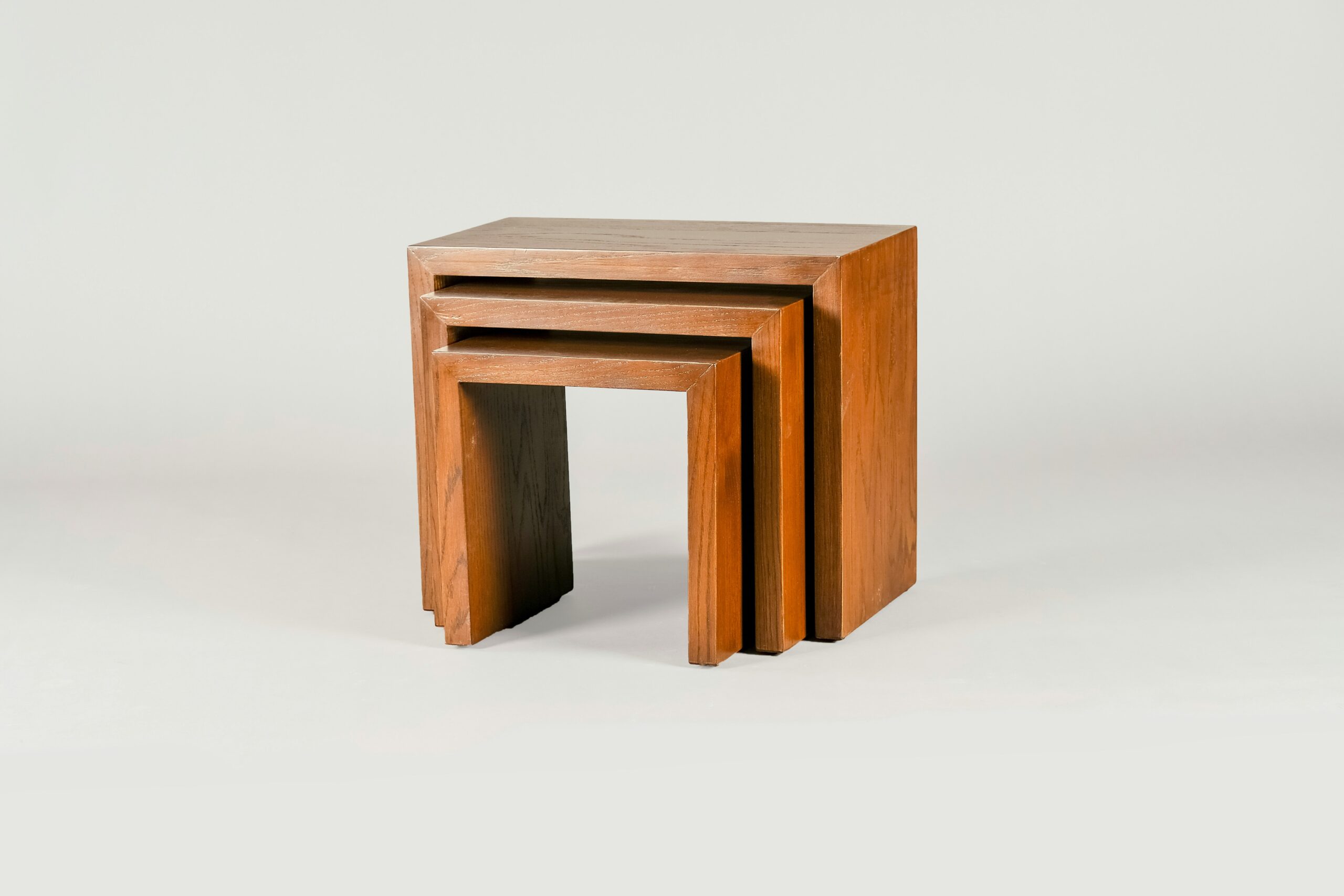
| Material | Ceramic |
|---|---|
| Color | Blue, White |
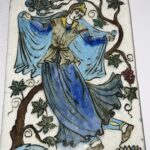
Qajar-Era Persian Hand-Painted Ceramic Tile (19th Century)
280,00 €
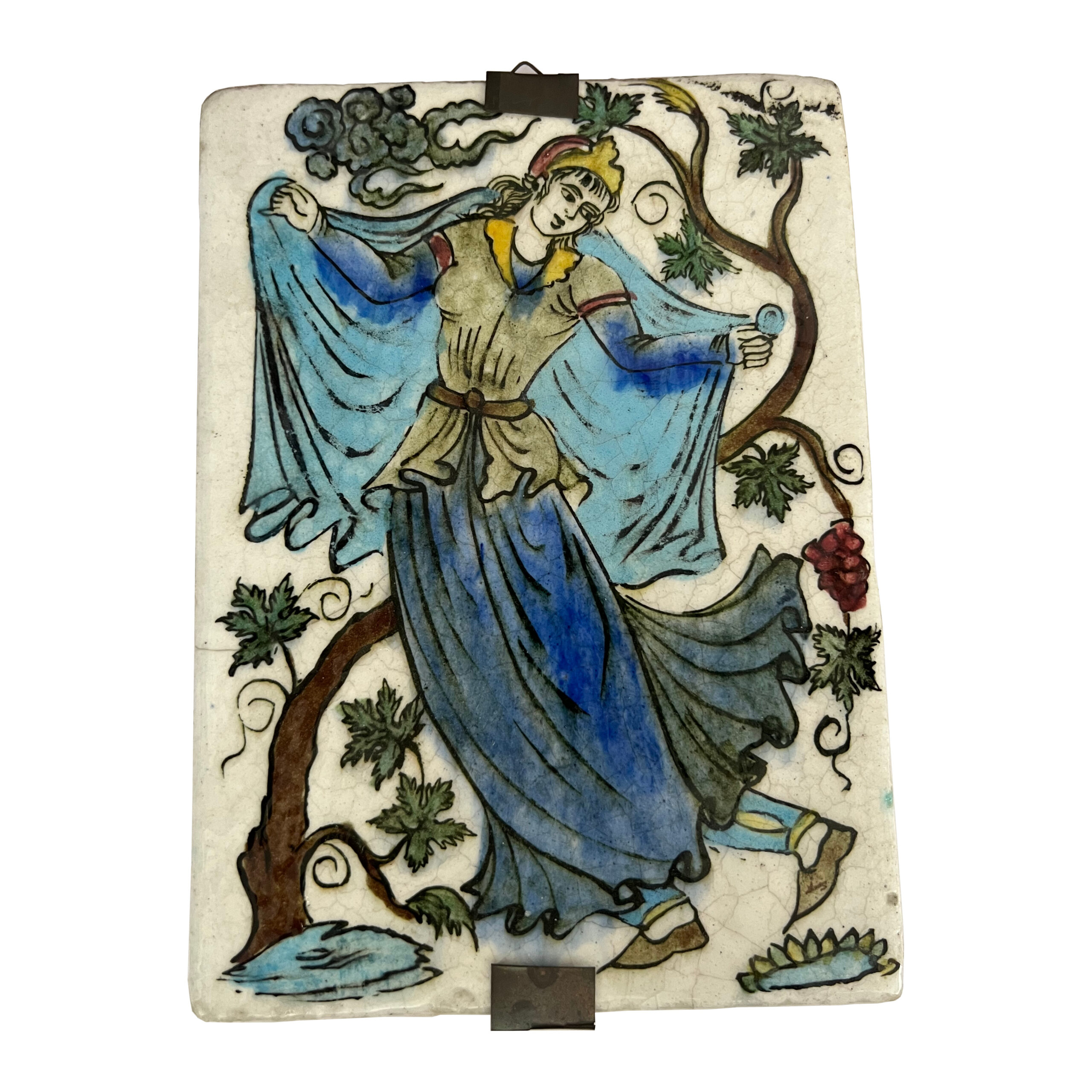
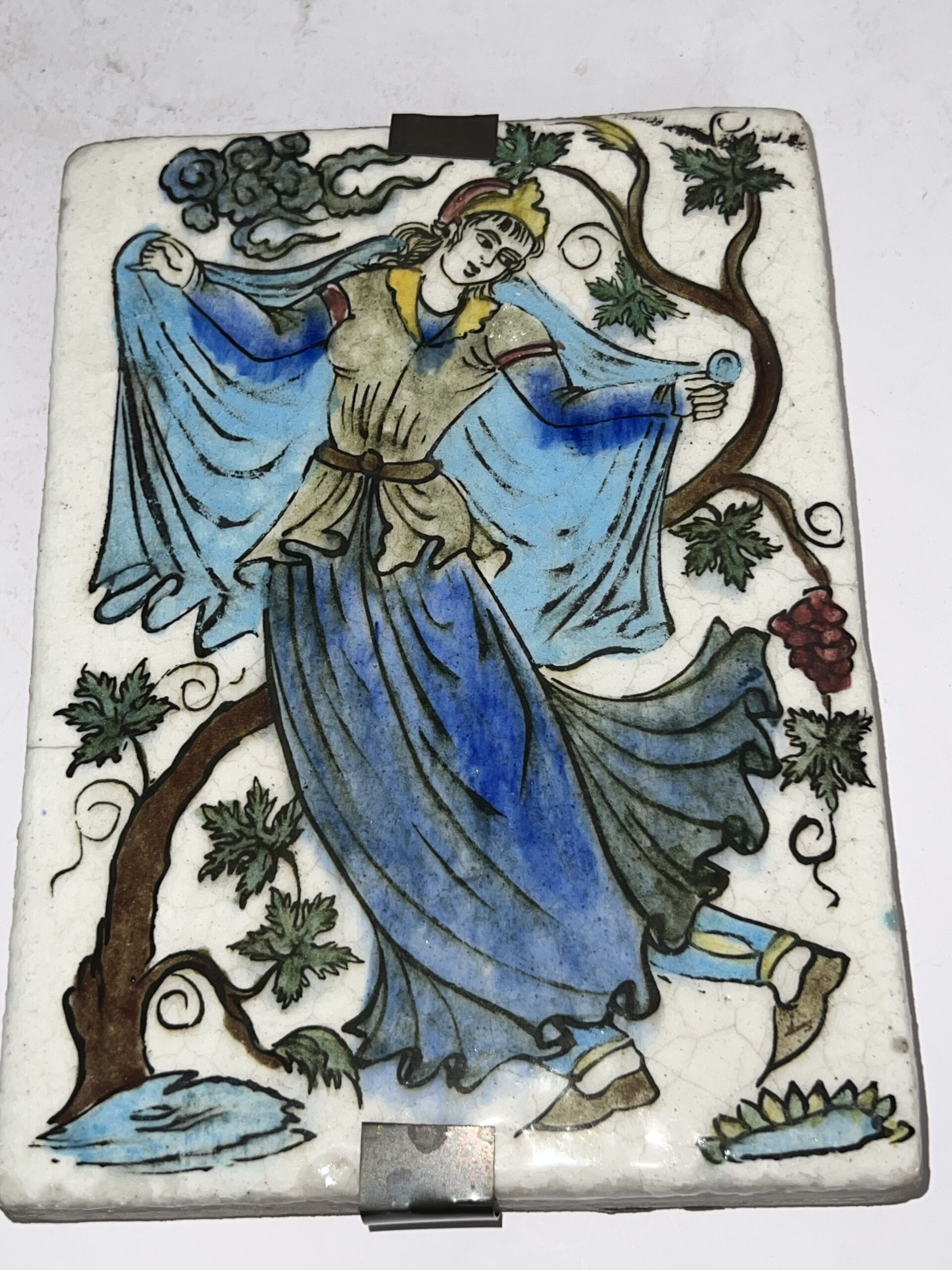
This striking hand-painted ceramic tile originates from the Qajar dynasty of Persia, a period renowned for its vibrant artistic expression and revival of traditional craftsmanship.
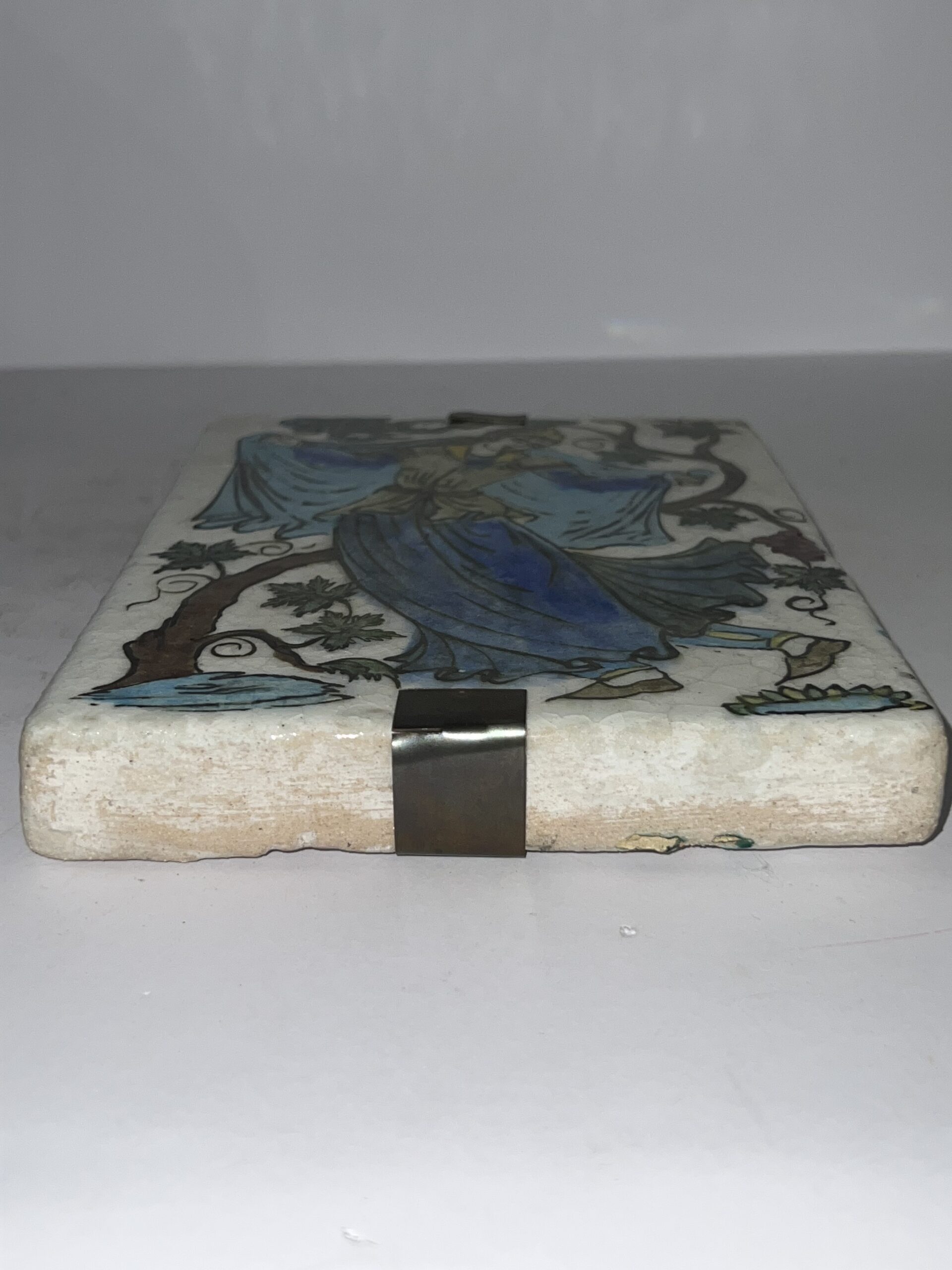
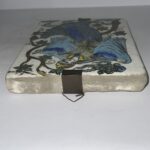
The tile depicts a dancing woman gracefully posed with flowing robes, surrounded by grapevines, foliage, and stylized clouds — motifs often associated with poetry, music, and the celebration of nature in Persian art. Rich cobalt blue, turquoise, green, and ochre pigments are used under a transparent glaze, which has developed a beautiful craquelure (fine crackle pattern) over time.
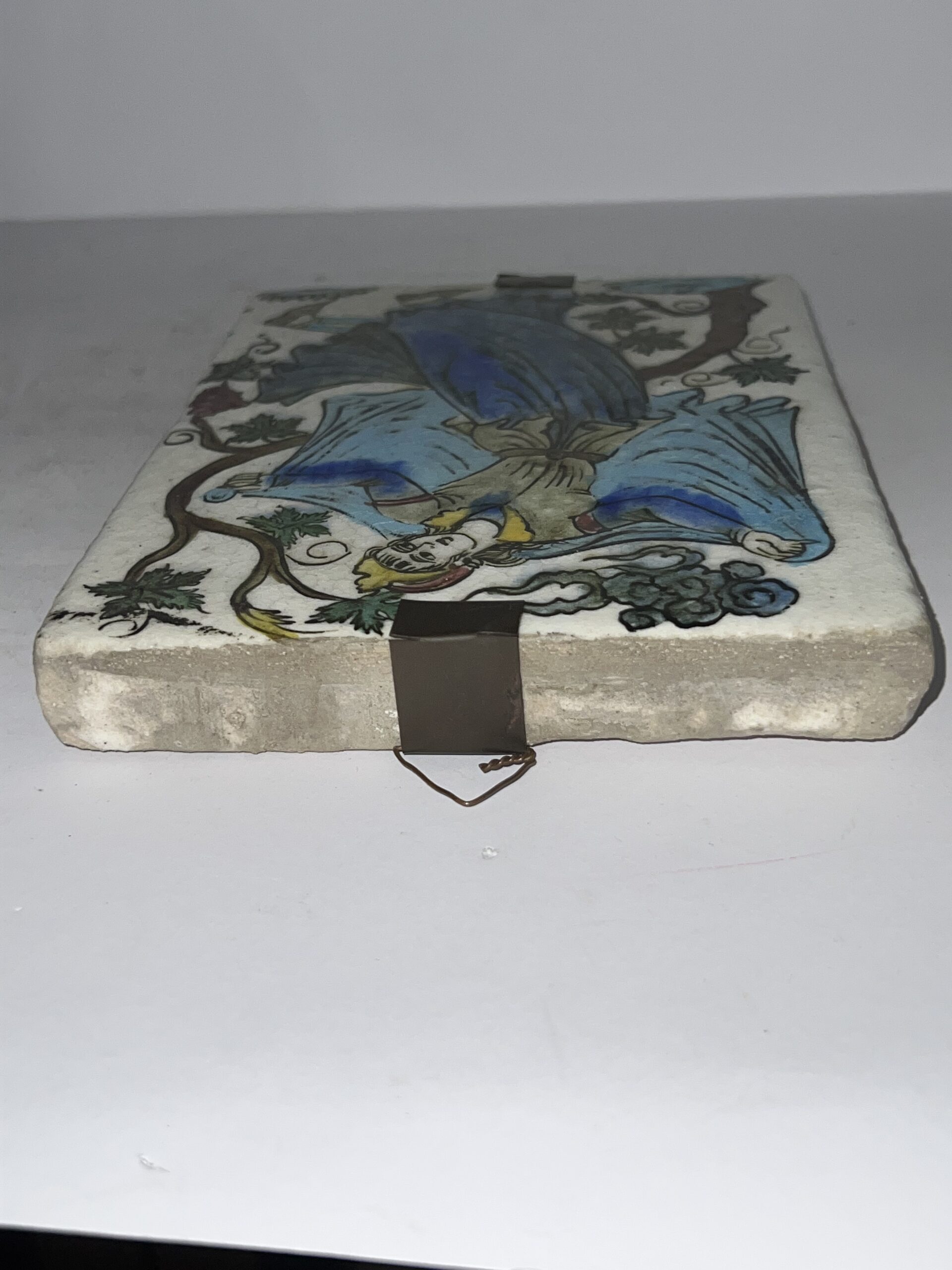
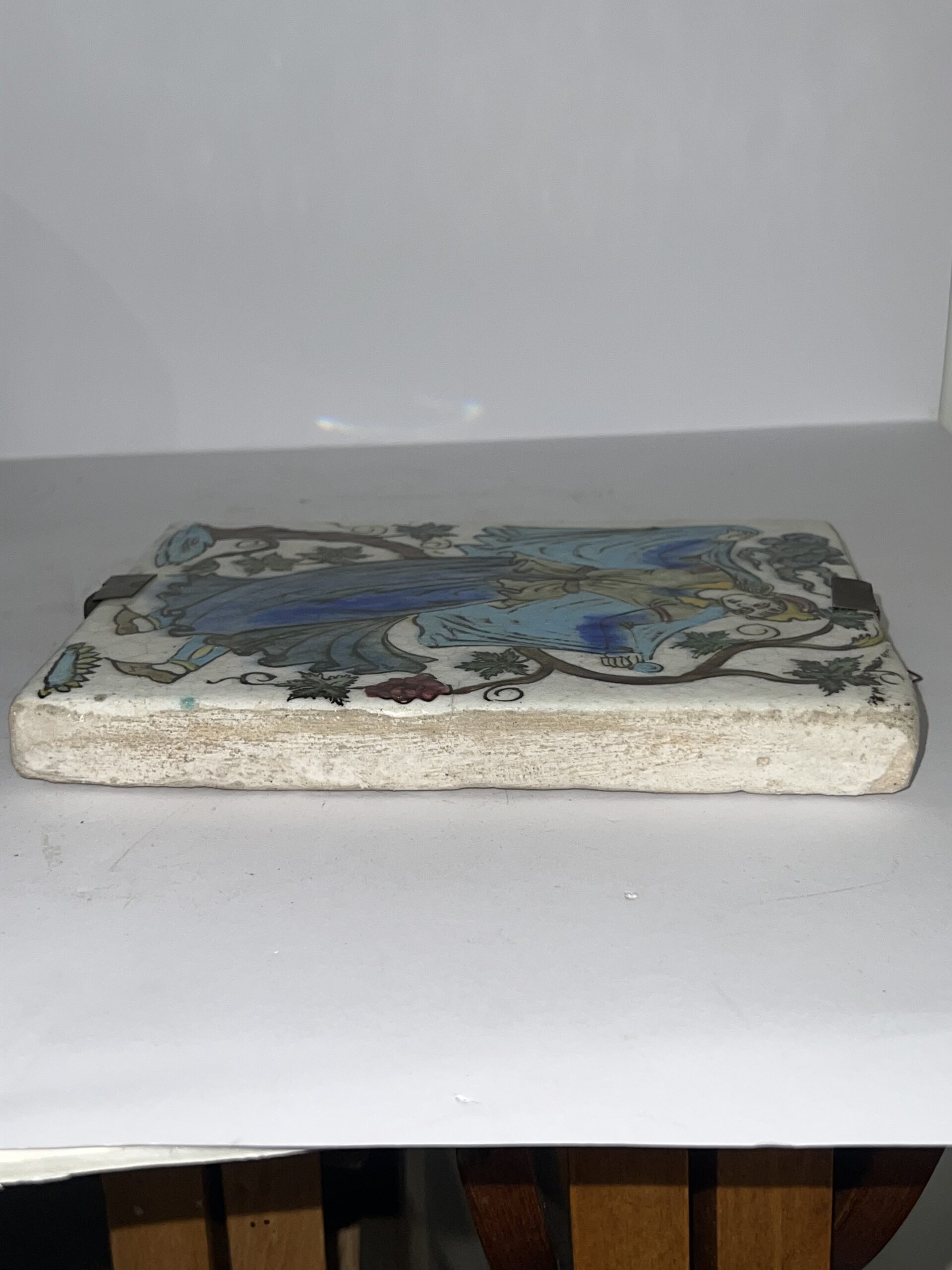
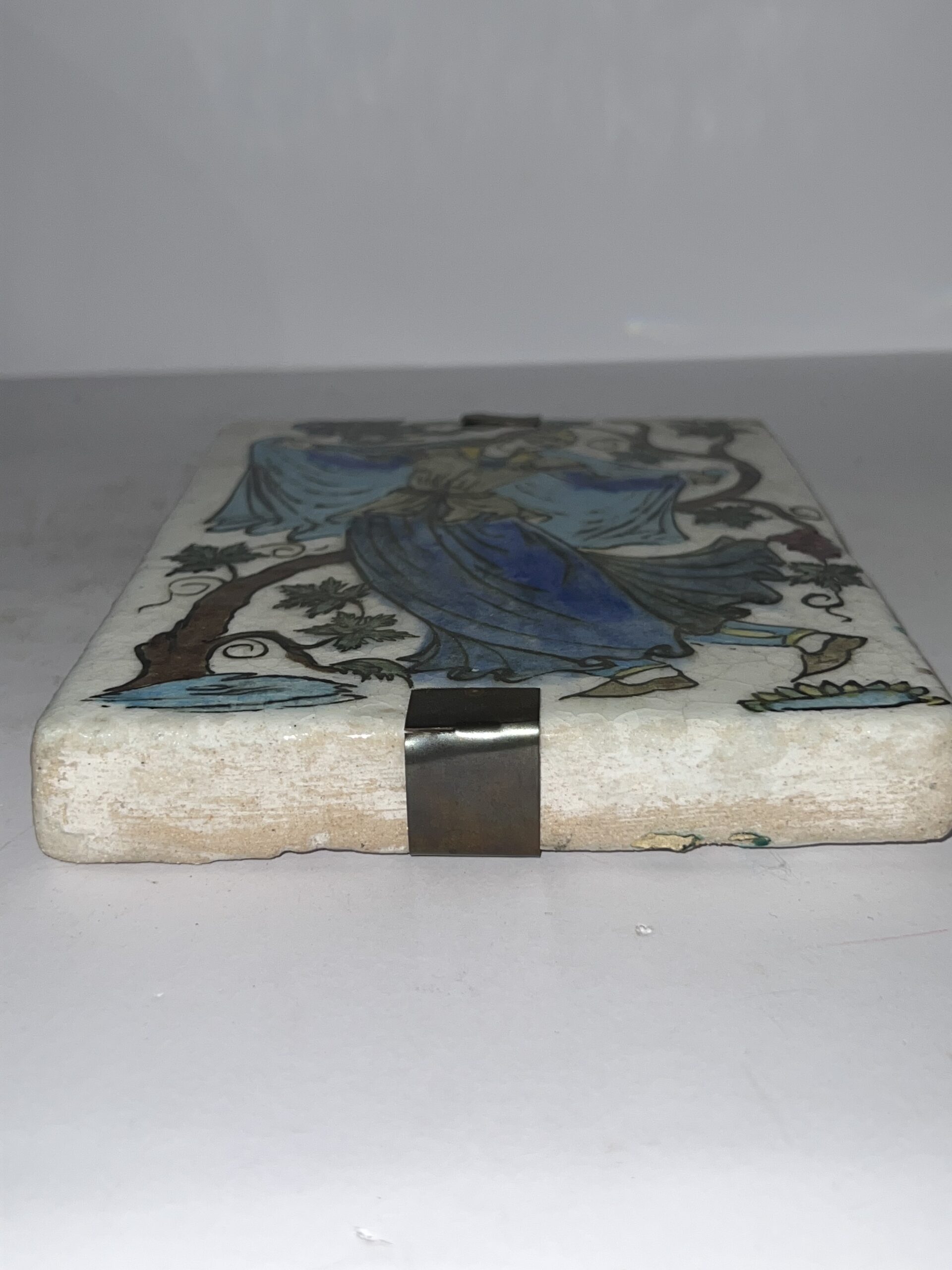
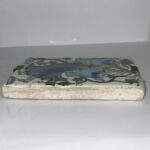
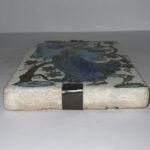
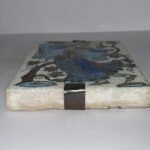
The tile is made from a thick, porous clay body typical of 19th-century Persian ceramic workshops, with unglazed edges and visible age-related wear, adding to its authenticity and charm.
Such tiles were traditionally used to decorate palaces, mansions, tea houses, and shrines, though many were also made as collectible panels for display.
-
Period: Late 19th – early 20th century
-
Origin: Persia (Iran), Qajar dynasty
-
Medium: Hand-painted ceramic tile with underglaze pigments
-
Dimensions:
-
Condition: Good antique condition, with minor edge wear and natural crazing consistent with age
A fine example of Qajar artistry, this tile captures the elegance and vitality of Persian decorative tradition and makes a striking display piece.
Additional information